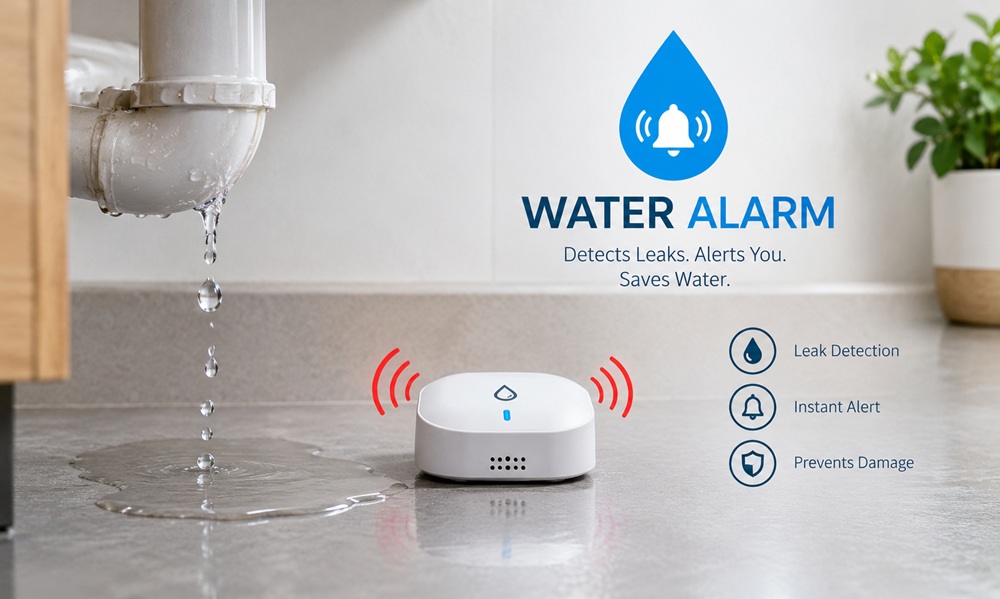
A water alarm is a small device that sounds an alert the moment it comes into contact with moisture, giving you a chance to respond before a minor drip becomes a serious problem. Unlike larger whole home monitoring systems, water alarms are typically standalone units designed for specific high risk spots around the house, which makes them one of the most affordable and accessible ways to catch a leak early.
How a Basic Water Alarm Works
Most water alarms use a simple sensing method. Two small metal contacts sit close together on the bottom of the device, and when water bridges the gap between them, it completes an electrical circuit that triggers a loud audible alarm, usually somewhere between 85 and 100 decibels, loud enough to be heard from another room.
This is different from systems that monitor flow or pressure through your plumbing. A water alarm doesn’t track usage patterns or detect leaks inside walls. It responds only when water physically reaches the sensor, which means placement is the single most important factor in whether it actually does its job.
Common Places to Install One
Water alarms work best in locations where a leak is likely to pool on the floor before being noticed. Underneath water heaters is one of the most common spots, since tank failures often start slowly before a full rupture. Behind washing machines catches hose failures, which are a frequent cause of sudden flooding. Under kitchen and bathroom sinks addresses slow drips from supply lines or drain connections that often go unnoticed until a cabinet floor is already damaged.
Basements near sump pumps are another high value placement, since sump pump failure during heavy rain can lead to significant flooding if nobody catches it in time. Near dishwashers and refrigerators with ice makers rounds out the list of spots that tend to generate leak related insurance claims.
Battery Powered Versus Connected Models
The simplest water alarms run on a small battery and sound a local alarm only, with no connection to your phone or any app. These work fine if you’re reliably home and close enough to hear the alert, but they offer no protection if a leak starts while you’re at work, asleep in a part of the house where the alarm isn’t audible, or away for an extended period.
Wi-Fi connected water alarms solve this by sending a push notification to your phone the moment moisture is detected, regardless of where you are. For anyone who travels, has a vacation property, or simply wants peace of mind while at work, this upgrade is usually worth the extra cost. Some connected models also integrate with smart home systems to trigger an automatic water shutoff valve, though that typically requires additional hardware beyond the basic alarm itself.
Choosing Between Multiple Units
A single water alarm protects one spot. Most homes have several locations worth monitoring, which means buying a multipack of three to five units is usually more practical than purchasing one and hoping it happens to be near wherever a leak eventually starts. Prioritizing your water heater, washing machine, and any sinks with a history of slow drips is a reasonable starting point if budget limits how many you can install at once.
Maintenance a Water Alarm Actually Needs
These devices are low maintenance by design, but they’re not maintenance free. Batteries need periodic checking, since a dead battery means the alarm won’t sound even if water reaches the sensor. Testing the alarm every few months by briefly touching the sensor contacts with a wet finger confirms it’s still functioning, which takes less time than most people assume and catches a dead unit before it matters.
Dust and debris can occasionally interfere with the sensor contacts over time, particularly in basements or utility closets, so a quick wipe down during routine home maintenance keeps it working as intended.
What a Water Alarm Won’t Catch
It’s worth being realistic about what these devices actually protect against. A leak inside a wall, under a slab foundation, or anywhere water doesn’t eventually reach floor level near the sensor will go undetected until it causes visible damage elsewhere. Water alarms are a reactive, spot specific layer of protection rather than a comprehensive monitoring solution, and understanding that limitation helps set realistic expectations rather than assuming one device covers the whole house.
Water Alarms Versus Whole Home Leak Detection
It helps to understand where a basic water alarm fits relative to larger leak detection systems that monitor an entire home’s water supply. A whole home system installs at the main line and can track overall water flow, sometimes shutting off the supply automatically if it detects a likely leak anywhere in the house. A water alarm does none of that. It simply sits in one spot and reacts the moment water physically touches it.
This makes water alarms a much more affordable entry point for leak protection, since a few units cost a fraction of what a professionally installed whole home system runs. The tradeoff is coverage. A water alarm only protects the exact spots where it’s placed, while a whole home system protects the entire plumbing system regardless of where a leak originates, including inside walls or under slab foundations where a standalone alarm would never make contact with the water.
For many homeowners, a reasonable approach combines both, using a handful of water alarms in the highest risk spots as an affordable first layer of protection, with a whole home system considered later as a bigger investment for more comprehensive coverage.
Renters and Water Alarms
Water alarms are particularly practical for renters, since they require no installation beyond placing the unit and don’t involve any modification to the property. Unlike a whole home system, which typically needs professional installation at the main water line, a battery powered water alarm can be set up in minutes and taken along when moving to a new place. For anyone renting an apartment with shared laundry connections or an older building with aging pipes, a small investment in a few water alarms is one of the easiest ways to get some protection without needing a landlord’s involvement.
A Realistic Look at What to Expect
A water alarm isn’t a dramatic piece of technology, and that’s largely the point. It sits quietly, often unnoticed for months or years, until the moment it’s actually needed. The value shows up specifically in that moment, when an alarm sounding at two in the morning gives someone enough warning to shut off a supply valve before a slow leak turns into standing water across a floor. For a device that typically costs less than a dinner out, the potential savings from catching even one leak early make it one of the more straightforward investments a homeowner or renter can make in protecting their space.