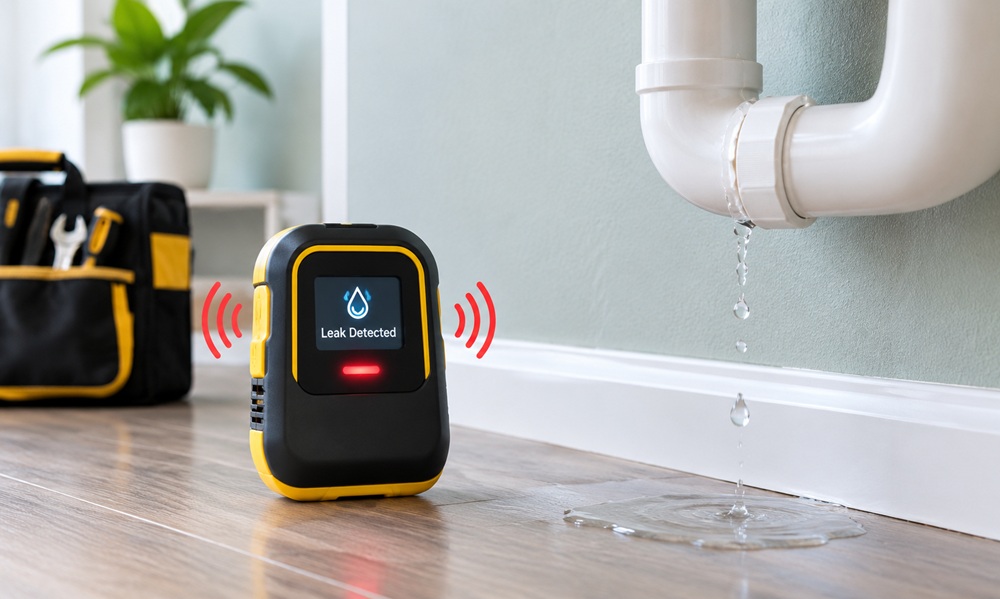
Water damage is one of the most expensive problems a home can have, and much of it starts small enough to go unnoticed for days or weeks. A leak detector is designed to close that gap, catching moisture or abnormal water flow before it turns into a flooded basement or a ruined floor. Understanding how these devices actually work makes it much easier to choose one that fits your home instead of buying based on marketing alone.
What a Leak Detector Is Designed to Do
At its core, a leak detector senses the presence of water where there shouldn’t be any, or identifies unusual water usage patterns that suggest a hidden leak. Some models sit directly on the floor near appliances and sound an alarm the moment they touch moisture. Others monitor your home’s main water line and track flow patterns, flagging anything that looks abnormal, like water running continuously overnight when no fixtures are in use.
The right type depends largely on what you’re trying to protect against. A single sensor near a water heater catches a very different kind of problem than a whole home system monitoring your main supply line.
The Main Types Available
Spot leak detectors are small, battery powered devices placed directly where leaks commonly occur, such as under sinks, behind washing machines, or near water heaters and sump pumps. They work by detecting contact with water through exposed probes or a moisture sensing pad, triggering a local alarm and often a smartphone notification if connected to a smart home system.
Whole home leak detection systems install at the main water line and monitor flow, pressure, and sometimes temperature across your entire plumbing system. These systems can often be configured to automatically shut off the water supply when they detect a likely leak, which matters most for situations where nobody is home to respond to an alert, such as a burst pipe while you’re on vacation.
Smart sensors that connect to a home Wi-Fi network fall somewhere in between, offering spot detection with the added benefit of remote alerts sent directly to your phone rather than relying solely on an audible alarm that only helps if someone is nearby to hear it.
How Detection Actually Happens
Most spot detectors rely on simple conductivity sensing. Water conducts electricity differently than air, so when moisture bridges two small sensor probes, it completes a circuit and triggers the alarm. This is reliable and inexpensive, which is why it remains the most common method in standalone units.
Flow based systems work differently, using a sensor installed on the main water line to continuously measure how much water is moving through your plumbing. Software built into these systems learns your household’s normal usage patterns over time and flags anything that deviates significantly, such as water running for hours when your family is away or usage occurring in an unusual overnight pattern.
Where Placement Actually Matters
A leak detector only works if it’s positioned where a leak would realistically occur. Common placement spots include directly under kitchen and bathroom sinks, behind and beneath washing machines, near water heaters, around sump pumps, and in basements near floor drains where groundwater seepage sometimes collects.
For whole home systems, placement is less about choosing a spot since the unit installs at the main line, but proper installation by someone familiar with your plumbing layout matters for accurate readings and reliable shutoff function if that feature is included.
What to Consider Before Buying One
Connectivity is one of the biggest practical differences between models. A basic battery powered alarm with no smart features only helps if you’re home and close enough to hear it, which limits its usefulness for situations like a leak starting while you’re at work or traveling. Wi-Fi connected models send alerts to your phone regardless of where you are, which is a meaningful upgrade for anyone who travels or has a home that sits empty for stretches of time.
Battery life and replacement cost are worth checking too, since a detector that silently dies from a dead battery provides no protection at all. Some models include low battery alerts sent to your phone, which closes that gap, while basic units rely on you remembering to check periodically.
For whole home systems with automatic shutoff, installation typically requires a plumber, and the upfront cost is significantly higher than standalone sensors. The tradeoff is broader protection and the ability to stop a major leak automatically rather than just alerting you to one already in progress.
Limitations Worth Knowing About
No leak detector prevents a leak from happening. It only shortens the time between when a leak starts and when someone finds out about it. A spot sensor that never gets wet because the leak occurs somewhere else in the house won’t trigger, which is why placement near your highest risk areas matters more than simply owning one.
Combining a few inexpensive spot sensors in high risk locations with good habits, like periodically checking under sinks yourself, tends to offer better practical protection for most homes than relying on a single device to catch everything.
How Much Leak Detectors Typically Cost
Basic spot sensors without connectivity are the most affordable option, often sold individually or in multipacks at a relatively low price point. Wi-Fi connected sensors cost more per unit but add remote notifications, which matters considerably more if a leak could start while nobody’s home. Whole home systems with automatic shutoff sit at the highest end of the price range once installation is included, reflecting both the hardware involved and the professional plumbing work required to tie into the main water line.
The right amount to spend generally comes down to what you’re protecting. A rental property you don’t visit often, or a primary home where a major leak would be financially devastating, often justifies the higher upfront cost of a whole home system. A single apartment or a home where someone is almost always present may get adequate protection from a handful of inexpensive spot sensors instead.
False Alarms and Sensor Reliability
Spot sensors occasionally trigger false alarms from condensation, high humidity, or accidental spills unrelated to an actual leak. This isn’t usually a sign of a defective unit, but it’s worth understanding before relying on one, since a history of false alarms can lead some homeowners to start ignoring alerts altogether, which defeats the purpose of having the device in the first place.
Flow based whole home systems can occasionally misread unusual but legitimate water use, such as filling a large pool or running multiple appliances simultaneously, as a potential leak. Most systems allow some adjustment to sensitivity settings, and taking the time to calibrate a new system during the first few weeks of normal household use tends to reduce false positives considerably.