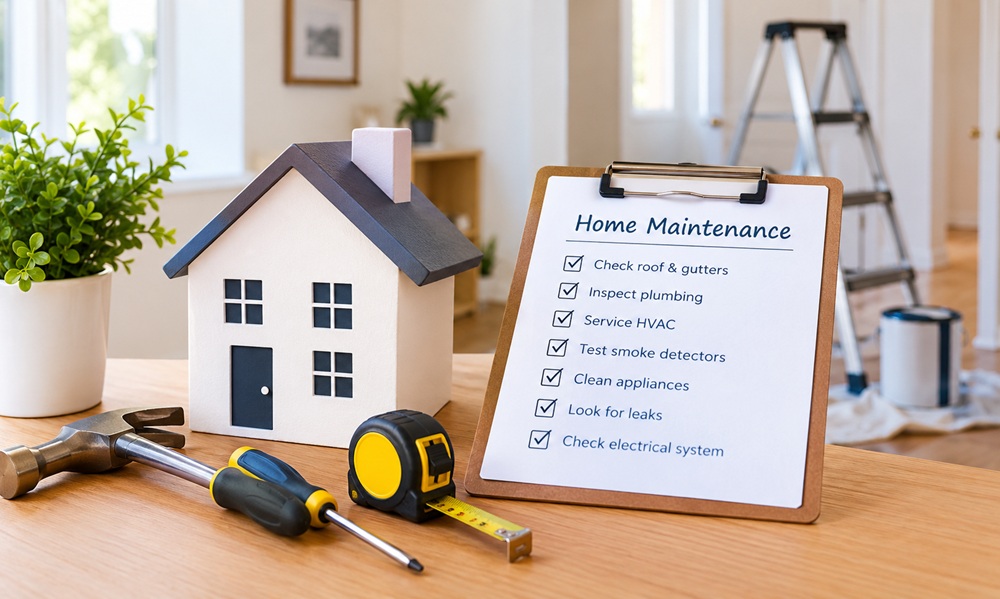
House maintenance is the ongoing work that keeps small problems from turning into expensive ones. A clogged gutter left alone for a year can lead to water damage along the roofline. A furnace filter that never gets changed makes the whole system work harder and wear out sooner. Most maintenance tasks take less than an hour, but skipping them consistently is how homeowners end up with repair bills that could have been avoided.
Why Routine Maintenance Actually Saves Money
Deferred maintenance has a way of compounding. A small roof leak that would have cost a couple hundred dollars to patch can turn into thousands in water damage, mold remediation, and ceiling repair if it’s ignored long enough. The same pattern shows up with HVAC systems, plumbing, and exterior siding. Catching problems early almost always costs less than fixing the damage they eventually cause.
Beyond cost, routine maintenance also protects your home’s resale value. Buyers and inspectors notice the difference between a well-maintained house and one where upkeep has clearly been neglected, and that difference shows up in both the inspection report and the final sale price.
Exterior Maintenance Tasks
The outside of your home takes the most environmental wear, so this is usually where maintenance matters most. Gutters need to be cleared of leaves and debris at least twice a year, more often if you have overhanging trees, since clogged gutters push water toward your foundation instead of away from it. Roof shingles should be visually checked for curling, cracking, or missing pieces, particularly after major storms.
Exterior caulking around windows and doors tends to crack and shrink over time, creating gaps that let in moisture and reduce energy efficiency. Checking and resealing these every couple of years is a relatively quick job that prevents bigger issues with window frames and interior walls. The foundation itself deserves a walk-around once or twice a year to look for new cracks, since early cracks are often cosmetic while ignored ones can grow into structural concerns.
Interior Systems That Need Regular Attention
HVAC filters are one of the most commonly neglected maintenance items, despite being one of the simplest. A dirty filter forces the system to work harder, increases energy bills, and shortens the lifespan of the unit. Most filters need replacing every one to three months depending on the type and whether you have pets.
Water heaters benefit from an annual flush to remove sediment buildup, which helps the unit run efficiently and last longer. Smoke and carbon monoxide detectors need battery checks at least twice a year, and the units themselves typically need full replacement every seven to ten years regardless of how well the batteries have been maintained.
A Seasonal Approach to Staying on Top of It
Breaking maintenance into seasonal chunks makes it easier to remember and less overwhelming than trying to do everything at once.
| Season | Priority tasks |
|---|---|
| Spring | Inspect roof after winter, clean gutters, check exterior for winter damage, service air conditioning |
| Summer | Check irrigation systems, inspect deck or patio, seal driveway cracks, trim trees away from the house |
| Fall | Clean gutters again, service heating system, seal gaps before cold weather, drain outdoor hoses and spigots |
| Winter | Check for ice dams, monitor for drafts, test detectors, watch for pipe freezing in extreme cold |
This isn’t an exhaustive list for every climate, since homes in different regions face different priorities, but it covers the tasks that matter for most homeowners regardless of where they live.
Plumbing and Electrical Checks Worth Doing Annually
A slow leak under a sink can go unnoticed for months if nobody checks. Taking a few minutes once or twice a year to look under sinks, around toilets, and near the water heater for signs of moisture catches problems before they cause real damage. Water pressure that seems unusually high or low compared to normal is also worth investigating, since it can point to a developing issue in the plumbing system.
On the electrical side, outlets that feel warm to the touch, flickering lights that aren’t related to a loose bulb, or a breaker that trips repeatedly are signs worth paying attention to rather than ignoring. These aren’t necessarily emergencies, but they’re the kind of early warning signs that routine attention catches before they become bigger problems.
When to Call a Professional Instead of Handling It Yourself
Routine maintenance like changing filters, cleaning gutters, and checking caulking is reasonable for most homeowners to handle. Anything involving your home’s main electrical panel, gas lines, structural elements, or roof work beyond a visual inspection is generally better left to a licensed professional, both for safety and because mistakes in these areas tend to be costly to correct.
Keeping a simple maintenance log, even just a note on your phone with dates, helps you track what’s been done and what’s overdue, which matters more than people expect once a house has been lived in for several years.
Setting Aside a Realistic Maintenance Budget
Many financial planners suggest budgeting somewhere between one and three percent of your home’s value annually for maintenance and repairs, though the right number depends heavily on your home’s age, climate, and how much of the work you handle yourself versus hiring out. An older home with original windows and an aging roof will generally need more set aside than a newer build still under warranty on major systems.
Treating this as a planned expense rather than an unexpected one changes how maintenance feels. Instead of dreading a surprise bill, a dedicated maintenance fund turns routine upkeep into something already accounted for, which makes it easier to address small issues promptly instead of putting them off because the money wasn’t budgeted.
Tools Worth Having on Hand
A basic set of tools covers most routine maintenance tasks without requiring a trip to the hardware store every time something needs attention. A good screwdriver set, adjustable wrench, caulking gun, flashlight, stud finder, and a reliable ladder handle the majority of small jobs homeowners run into. Beyond tools, keeping a small supply of common replacement parts, like HVAC filters sized for your system and extra smoke detector batteries, means you’re not scrambling to find the right size at an inconvenient time.
Signs a Task Has Moved Beyond Routine Maintenance
Maintenance and repair aren’t always easy to tell apart, especially when a task that started as routine upkeep reveals a bigger underlying issue. A gutter cleaning that uncovers rotted fascia boards, or an HVAC filter change that reveals a system struggling to maintain airflow, has moved past simple maintenance into repair territory. Recognizing this shift early, rather than continuing to treat it as routine upkeep, usually prevents the kind of neglect that turns a moderate repair into a much larger one later.