
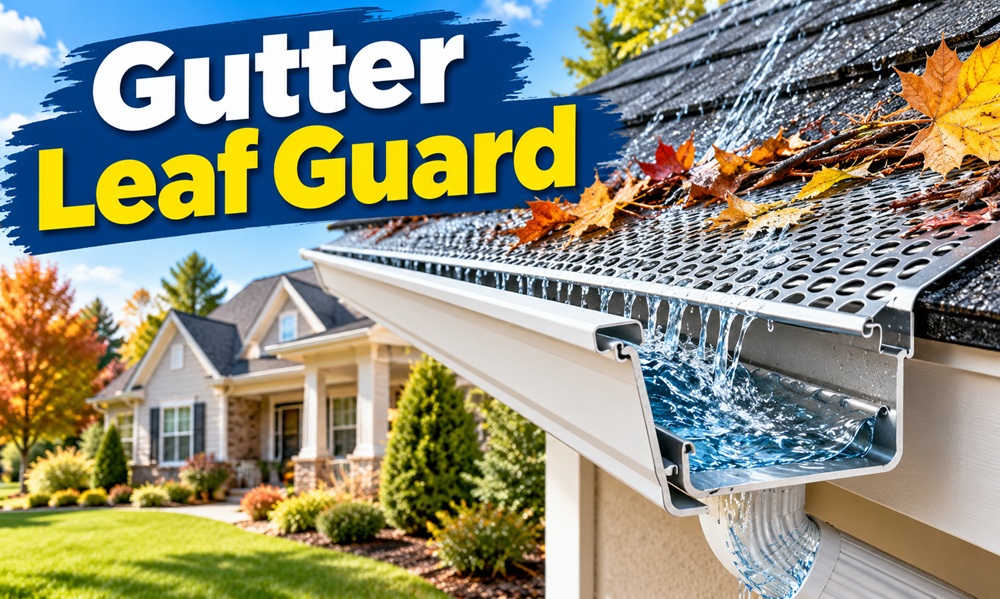
A gutter leaf guard is a cover that sits over your gutters to keep leaves, twigs, and other debris out while still letting rainwater flow in. The goal is simple. You spend less time on a ladder scooping out soggy leaves, and your gutters stay clear enough to carry water away from the house.
No guard removes maintenance completely, though, and some work much better than others depending on the trees around your home. Picking the right one comes down to what’s falling on your roof, how heavy your rain gets, and how your gutters are built.
What a leaf guard actually does
Gutters clog because debris settles in the channel and mixes with granules from the roof, dirt, and standing water. A clogged gutter can overflow, send water down siding, and in colder climates contribute to ice buildup along the roof edge. A leaf guard reduces how much material gets in. Large leaves and sticks stay on top and usually blow or wash off, while water passes through openings or around a curved edge into the gutter.
What it doesn’t do is make the gutter immune to dirt. Fine particles, seeds, pollen, and roof grit can still get through certain designs, so most guarded gutters still need an occasional check and a flush.
The main types
Screen guards
These are flat or slightly curved sheets with larger holes, often made from aluminum or vinyl, that sit across the top of the gutter. They tend to be inexpensive and simple to put in. The trade-off is that the larger openings let smaller debris through, such as pine needles and seeds, and those can lodge in the holes and build up on the surface.
Micro-mesh guards
Micro-mesh covers use a very fine screen, usually stainless steel, set in a frame. The tiny openings block much smaller debris, including shingle grit and many seeds, while water still passes through thanks to surface tension. They generally cost more, but they’re a popular pick for homes under heavy tree cover. Over time, a fine film of pollen or dirt can sit on the mesh, so an occasional rinse with a hose or soft brush helps.
Reverse curve guards
Sometimes called surface tension guards, these are solid hoods with a rounded front edge. Water follows the curve into a narrow slot in the gutter while leaves slide off. They can handle a wide range of debris, but very heavy downpours may overshoot the opening, and they need to be pitched properly to match the roof. Installation can be more involved than with other types.
Foam inserts
Foam wedges fit inside the gutter channel and let water soak through while blocking larger material. They’re cheap and easy for homeowners to place. The downside is that debris can collect on top and in the foam, and some homeowners find they need replacing or cleaning more often than other types.
Brush guards
Brush guards look like bottle brushes laid inside the gutter. Leaves rest on the bristles while water flows past. They’re inexpensive and quick to install, but pine needles and small debris can get tangled in the bristles, which sometimes means pulling them out for cleaning.
How to choose
Start with the trees. Maple, oak, and other broadleaf trees drop large leaves that nearly any guard will handle. Pine, fir, and other conifers drop needles that slip through coarse openings, so a micro-mesh or reverse curve guard is usually the better match. Trees that drop seeds, tiny blossoms, or flowering debris also point toward finer mesh.
Then consider the roof. Steep roofs push water faster, which can cause overshoot with some designs. Low-slope roofs can leave debris sitting on top of a guard rather than sliding off. Roofing material matters too, since certain guards slide under shingles and others attach to the fascia.
Finally, think about your climate. Heavy rain, snow load, and ice affect how well a guard performs and how long it lasts. Guards don’t prevent ice dams, which form when heat escapes through the roof and melts snow, so those still need to be addressed with insulation and ventilation.
What affects the cost
Prices vary a lot by region and by product, so quoting a flat number would be misleading. These factors move the total.
- The material, since aluminum, vinyl, stainless steel, and foam all price differently
- The length of gutter you need to cover, including the number of corners and downspouts
- The height of your home, because multi-story work takes more time and safety gear
- Whether you install it yourself or hire a company
- Whether the gutters themselves need repair or replacement first
It rarely makes sense to put guards over sagging, leaking, or poorly pitched gutters. Fix those problems first, because the guard will just cover them up.
DIY or professional installation
Some guards snap or slide into place and suit a confident homeowner who’s comfortable working on a ladder. Foam inserts and many screen guards fall into this group. Others need to be fastened under the first row of shingles, attached to the fascia at a precise angle, or sized to the gutter’s pitch. Those are often installed by a professional.
Check your roof warranty before you start. Some shingle manufacturers have rules about products that slide beneath the shingles, and the wrong installation can create a dispute if something goes wrong. If you hire a company, ask what the warranty covers, whether it transfers to a new owner, and who pays for service calls.
Common problems
Even good guards run into trouble now and then. Debris can pile up on top of a flat screen and block water. Fine mesh can get coated with pollen. Water can run over the edge of a hood during a storm. Birds and small animals sometimes build nests under or around certain styles. Most of these issues are minor, and a quick look after a big storm or at the end of leaf season usually catches them early.
If water is overflowing even with guards installed, check the downspouts first. A clogged downspout is a much more common cause than a failed guard.
Caring for gutters that have guards
Guards cut down the work, but a little routine keeps them performing. Walk around the house after the main leaf drop and look for debris lying on top of the covers. A leaf blower on a low setting or a long soft brush can clear it without climbing onto the roof. Once a year, run a hose along the guard and watch where the water goes. If it pours over the front edge or backs up near a corner, something is blocking the flow.
Pay attention to the downspouts, too. Material that slips past the guard ends up there, and a clogged downspout can make a perfectly good guard look like it failed. Clearing the bottom outlet and flushing the pipe takes only a few minutes.
A sensible way to decide
Before you buy anything, stand under your trees and look at what actually lands on your roof. Take photos of your gutters and note the roof pitch and material. Get quotes from a couple of local installers, and ask each one why they recommend a particular product for your house rather than just accepting a standard pitch.
A leaf guard is a reasonable investment when your gutters clog often, when the roof is high or steep, or when you simply don’t want to climb a ladder twice a year. Choose one that fits your trees and your roof, keep an eye on it after storms, and it can take a good deal of the hassle out of gutter care.