
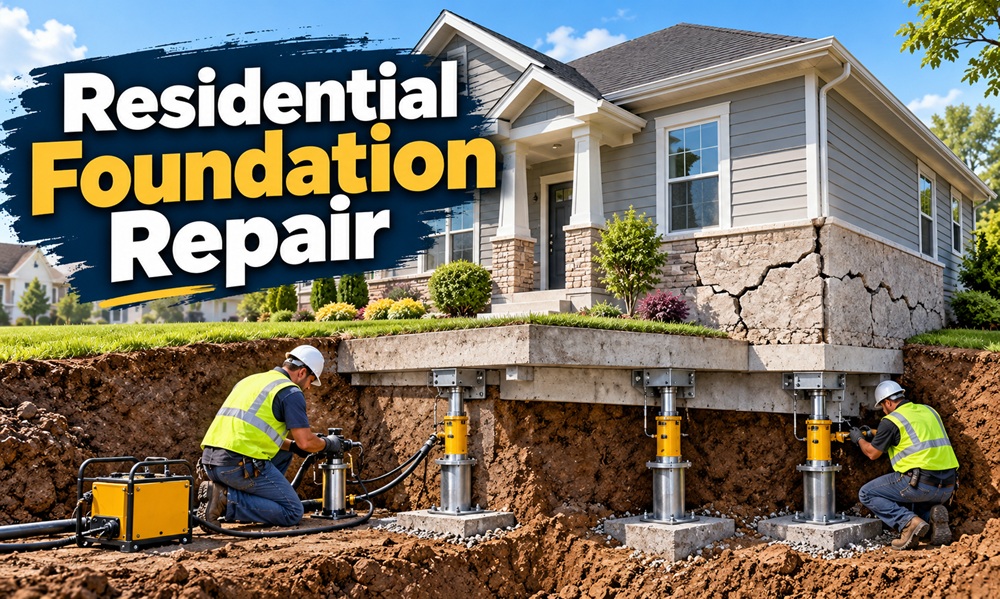
Residential foundation repair is the work of stabilizing, leveling, or sealing the structure a house rests on. What the job involves depends entirely on what went wrong. A hairline crack in a poured concrete wall may only need sealing and a drainage fix, while a corner that has sunk an inch or more usually calls for piers that carry the load down to firmer ground. Because the repairs differ so much, the diagnosis matters more than the method, and that is where a good project starts.
Signs your foundation may be moving
Every house settles a little, and some cosmetic cracking is normal. The real question is whether movement is still happening, and the pattern of damage usually tells you.
Common warning signs include stair-step cracks in brick or block that follow the mortar joints, horizontal cracks along a basement wall, and doors or windows that suddenly stick or refuse to latch. Gaps can open between walls and ceilings, or between the house and a chimney or porch. Floors may slope, or feel bouncy over a crawl space. Cracks that grow wider over a few months deserve more attention than ones that stay the same.
One crack alone rarely proves much. Several of these showing up together in the same part of the house is a reason to get an inspection. A simple way to track a crack is to mark each end with a pencil, date the marks, and check again after a season.
Cracks that usually aren’t urgent
Not every crack signals structural trouble. Thin vertical cracks in a poured concrete wall are often the result of normal curing and shrinkage, and they tend to stay put. Small hairline cracks in a slab are also common. These are still worth sealing, since they can let in moisture, but they don’t automatically point to a failing foundation. The ones that raise concern are wider at one end, run diagonally, show one side sitting higher than the other, or come with other symptoms inside the home.
Why foundations shift
Almost every foundation problem traces back to water and soil. Clay-heavy soil swells when it is wet and shrinks when it dries out, so a house can be nudged upward in a rainy spring and left partly unsupported by late summer. Roof runoff aimed at the walls, clogged gutters, plumbing leaks beneath a slab, and large trees pulling moisture from the ground nearby all add to the problem. In colder regions, freezing ground puts pressure on the walls each winter. Fill soil that wasn’t compacted well during construction can also settle unevenly years later.
The cause changes the repair. Lifting a sunken corner without correcting the moisture problem behind it often means paying for the same job twice.
Common repair methods
Piers and underpinning
When part of a foundation has sunk, piers move the weight of the house to stable soil or bedrock. Steel push piers are driven in hydraulically, using the weight of the structure as resistance. Helical piers screw into the ground like oversized bolts and are often chosen for lighter loads. After the piers are set, the contractor can raise the settled section back toward level, although how far it can safely go depends on the condition of the framing, plumbing, and finishes above it. Poured concrete piers are another option in some areas.
Slab lifting
For concrete that has sunk, such as garage floors, patios, and walkways, crews fill the void underneath with material that lifts the slab. Mudjacking pumps a cement-based slurry through holes drilled in the concrete. Polyurethane foam does the same job through smaller holes and adds less weight. Neither fixes the washed-out or poorly compacted soil that caused the problem, so ask what will be done about the cause.
Crack repair
Epoxy injection can bond cracks in poured concrete and restore some of the wall’s strength, while flexible polyurethane suits cracks that may keep moving slightly or that leak. Surface patching alone is mostly cosmetic. A crack that keeps reopening is telling you the movement behind it still needs attention.
Wall stabilization
Basement walls that bow inward under soil pressure can be reinforced with steel beams, carbon fiber straps, or anchors tied into stable soil outside. Carbon fiber generally suits minor movement, while more serious bowing tends to call for steel or anchors. In severe cases a section of wall may have to be excavated and rebuilt.
Crawl space and pier-and-beam repairs
Homes built on piers and beams often need shimming, new support posts, additional beams, or moisture control such as a vapor barrier and better ventilation. Sagging floors in these homes frequently come from rotted or damaged wood rather than shifting soil.
Drainage and grading
Redirecting water is the least dramatic repair and often the most important. Extending downspouts, regrading soil so it falls away from the house, adding a French drain or sump system, and fixing leaking pipes can end the cycle that caused the damage in the first place.
What a repair project usually looks like
- An inspection identifies the likely cause and the affected areas.
- An engineer’s report or a contractor’s proposal sets out the scope of work.
- Permits are pulled where your area requires them.
- Crews excavate or drill at the repair points and install piers, anchors, or reinforcement.
- The structure is lifted or stabilized, and the area is backfilled.
- Drainage corrections are made, and interior cosmetic repairs follow once the structure has settled.
Cosmetic work such as patching drywall, rehanging doors, and repairing brick generally waits until the foundation is stable, so those costs tend to show up late in the process.
What affects the cost
Prices vary widely by region and contractor, so a single number would mislead. The factors that tend to move the total include how many piers or anchors are needed and how deep they must go, whether crews have to excavate around the house, and how easy the site is to access, since tight side yards and finished basements slow the work. Related damage to drywall, flooring, brick, or plumbing adds to the bill, as do engineering reports, permits, and drainage improvements.
Collect at least two or three written estimates. Each should name the method, the number of repair points, and what the warranty covers. A quote that offers only a total price makes comparison nearly impossible.
Getting an honest evaluation
A contractor who earns money from repairs has a built-in reason to recommend them. For anything beyond minor cracks, many homeowners hire an independent structural engineer to inspect the house and write a report before collecting bids. The report provides a neutral scope of work to compare against, and some lenders and insurers ask for one anyway.
When vetting contractors, check licensing where your state requires it, ask for proof of insurance, and read the warranty closely. Find out whether it transfers to a new owner if you sell. Ask to see completed jobs similar to yours, and be wary of anyone who pressures you to sign the same day.
Keeping the problem from returning
Keep gutters clear and downspouts discharging several feet from the wall. Maintain soil that slopes gently away from the house, and avoid planting large trees close to the foundation. Fix plumbing leaks quickly. During long dry spells, keeping soil moisture fairly even around the perimeter can reduce shrinkage, and a soaker hose is one way to do it if your engineer or contractor recommends it. Walk the outside of the house each spring and fall, and recheck any cracks you marked.
Deciding what to do next
If you’ve noticed widening cracks, doors that suddenly stick, or a floor that has begun to slope, don’t wait for the damage to become obvious. Take dated photos, deal with any obvious water problems, and have an engineer or an experienced foundation specialist inspect the house. Acting early usually keeps the repair smaller, and a clear diagnosis is the best protection against paying for work you don’t need.