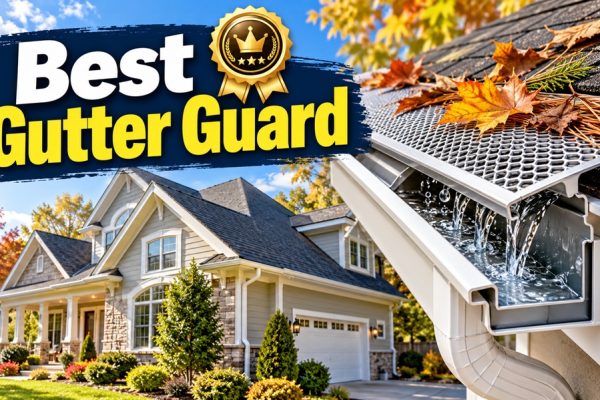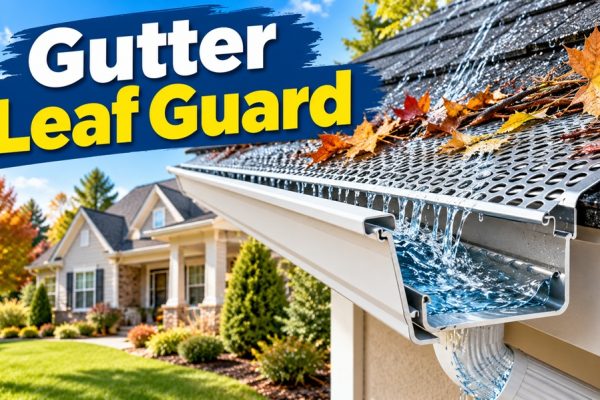
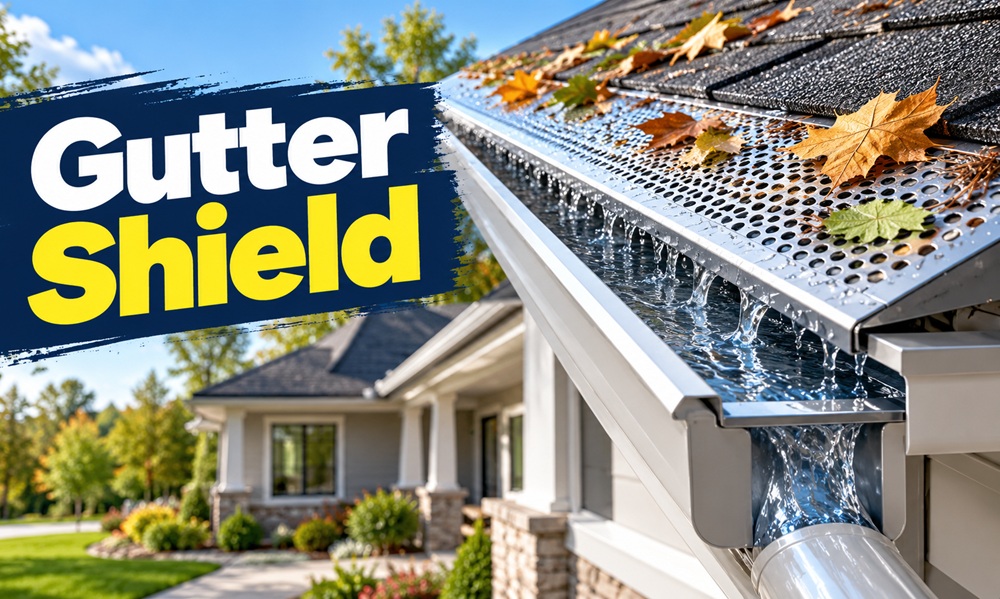
Most homeowners meet the term gutter shield in a sales pitch or on a product box, usually with a promise that the gutters will never clog again. That promise deserves a closer look. A gutter shield is a cover that fits over or across the top of a gutter to block debris and let water in. The idea is sound, but how well a particular shield performs depends on its design, how it’s installed, and the house it’s installed on.
This article looks at how shields work, where they run into trouble, and what to ask before you sign anything.
How a gutter shield works
The basic physics are simple. Rain runs down the roof and meets the shield. In many designs, water clings to a curved or angled surface and follows it into a narrow opening on the gutter side. Leaves and heavier debris don’t make that turn. They stay on top and slide off or blow away.
Other designs use a perforated or screened surface instead. Water drops through the openings while larger debris sits above. Fine mesh versions use tiny holes that rely on the way water tends to stick to surfaces, which lets liquid pass while keeping most solids out.
Both approaches let the gutter receive water and keep most of the clutter out. Neither one makes the gutter system self-cleaning forever.
Solid hood shields
A hood shield has a smooth top, a rounded nose, and a slot underneath. It’s the version most people picture when they hear the phrase.
The advantages are a solid surface that sheds big debris easily and a profile that sits neatly along the roofline. The drawbacks show up in specific conditions. During a very heavy downpour, a fast stream of water can overshoot the slot and spill past the gutter. On a steep roof, the same thing can happen with moderate rain. Seeds and shingle grit can also work their way into the slot over time, which means a gutter that looks clean from the ground may still have buildup inside.
Mesh and screen shields
These shields stretch a perforated sheet or a fine screen across the opening. They let water in across their full width, which helps in heavy rain. Coarse screens let smaller debris through and can catch needles and seeds in the holes. Fine mesh versions block more but can develop a film of pollen or dirt that needs rinsing now and then.
Foam and brush options
Some products sold under the shield label are really inserts placed inside the gutter. They catch debris on top and let water pass through or around. They cost less and go in quickly, but debris can collect in them, and many homeowners end up cleaning or replacing them more than they expected.
A quick comparison
| Style | Handles well | Watch for |
|---|---|---|
| Solid hood | Leaves, twigs, and large debris | Overshoot in heavy rain, grit in the slot |
| Fine mesh | Small debris and a wide range of trees | Surface film that needs rinsing |
| Coarse screen | Large leaves at a modest price | Needles and seeds lodging in holes |
| Foam insert | Budget installs | Debris collecting in the material |
Shield, guard, or cover
The words get used interchangeably. Gutter shield, gutter guard, gutter cover, and gutter helmet all describe products that sit over the gutter to keep debris out. Some companies use shield for a specific hood style and guard for everything else, while others use them as plain synonyms. Don’t rely on the name to tell you what you’re getting. Ask to see the product, learn how it attaches, and look at how water is supposed to enter the gutter. Two products with the same label can perform very differently on the same roof.
Where shields cause problems
A shield only works as well as the gutter underneath it. If the gutter sags, leaks at the seams, or has the wrong pitch, covering it won’t fix those issues and may hide them. Inspect the gutters first.
Roof edges matter too. Some shields are designed to slide beneath the first course of shingles, which can lift them slightly. Others attach to the front of the gutter or to the fascia. Before choosing, find out how the shield attaches and whether it could affect your shingle warranty. Reading the roofing manufacturer’s terms or asking the installer to confirm in writing can prevent a headache later.
Winter brings its own concerns. Snow and ice can build up on top of a shield, and in cold regions a covered gutter may freeze differently than an open one. Shields don’t prevent ice dams, which are driven by heat escaping from the attic. Proper insulation and ventilation do far more for that problem than any gutter cover.
Pests are worth a thought. Certain styles leave a gap that birds or small animals can use for nesting, while tighter designs discourage them. Ask how the product handles that.
Reading the sales pitch
Some marketing leans on phrases like never clean again or lifetime guarantee. Treat them with healthy skepticism. A few questions will tell you a lot.
- What does the warranty actually cover, and for how long?
- Is the warranty transferable if you sell the house?
- Does it cover clogging, or only defects in the material?
- Who handles service calls, and is there a fee?
- Will the installation affect the roof warranty?
- What happens if water overshoots the shield?
A reputable company will answer plainly and put the details in writing. If the answers are vague, or if the salesperson pushes you to decide the same day, keep looking. It’s fine to collect several quotes and compare them.
DIY or hire a professional
Some shield products clip or slide into place and work well for homeowners who are comfortable on a ladder and have simple rooflines. Many hood and mesh systems, though, need precise alignment to the roof pitch. An angle that’s slightly off can cause overshoot or let debris collect where it shouldn’t.
Safety counts here as well. Gutters sit at the edge of a roof, often two stories up, and falls from ladders are a real hazard. If your house is tall, steep, or has complicated roof lines, paying a professional is often the safer and sometimes more economical choice.
What affects the price
The cost depends on several things that vary from house to house. Material comes first, since aluminum, steel, vinyl, and fine stainless mesh are priced differently. The length of gutter is a major factor, along with the number of corners, valleys, and downspouts. Home height and roof complexity change labor time. And the condition of the existing gutters matters, because repairs or replacements add to the total.
A fair quote lists the product, the footage, and the warranty terms. Without those details, comparing offers isn’t really possible.
Does a gutter shield make sense for your home
A shield tends to pay off when trees hang over the roof, when the gutters are hard to reach, or when you’re tired of clearing them out each season. It makes less sense if your yard has few trees, your roof is low and easy to reach, or your gutters are already in poor shape.
Whatever you choose, plan on checking it twice a year, once in late autumn and once in spring, and again after a major storm. A quick look from a ladder or with a hose can catch buildup before it causes overflow. A shield won’t remove the need for gutter care, but a well-chosen and properly installed one can make that care a lot lighter.