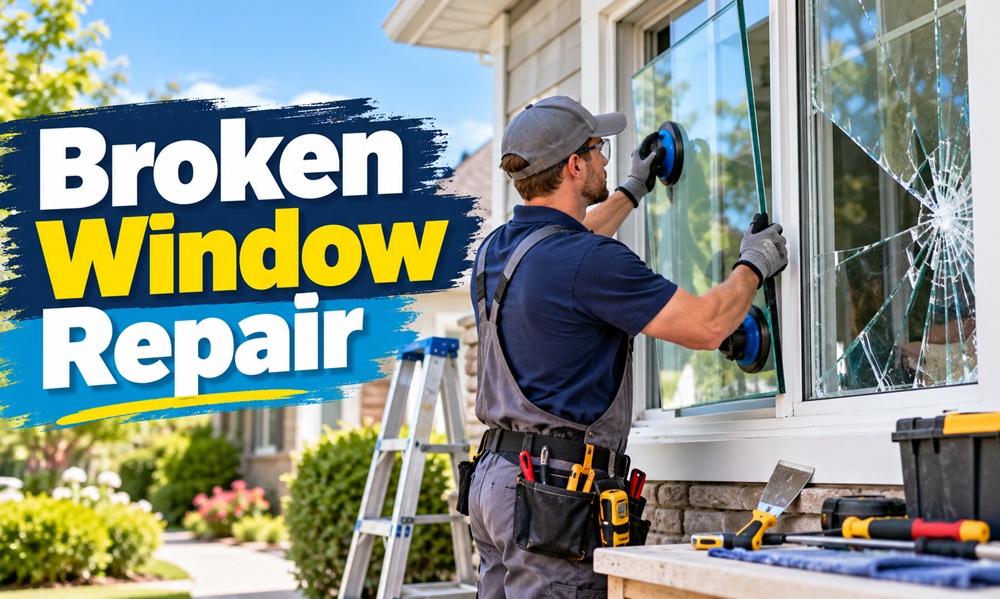
A broken window is a safety problem before it’s a repair problem. Once the glass is secured, the real question is whether you need a new pane, a new sash, or a whole new window. The answer depends on the window type, how much of the frame is damaged, and whether the glass is a single pane or a sealed double-pane unit.
Make the area safe first
Put on thick gloves, safety glasses, and closed-toe shoes before touching anything. Keep children and pets out of the room until the glass is cleaned up. Loose shards can be pulled out of the frame with pliers, working from the top down so nothing drops on you. If the glass is cracked but still in place, press clear packing tape or contact paper across it to hold the pieces together.
Sweep up the large pieces, then pick up slivers with a damp paper towel, since a vacuum can miss them and a bare hand shouldn’t be used. Wrap broken glass in newspaper or place it in a sturdy box before throwing it away, and label it so a sanitation worker knows what’s inside. To cover the opening until the repair, tape heavy plastic sheeting over the frame or screw a piece of plywood across it.
Deciding between repair and replacement
Repairing the glass alone often works when the frame is solid, the window still operates normally, and the glass is a single pane. A replacement sash or window makes more sense when the frame is rotted, warped, or bent, when sealed double-pane glass has failed, or when the window was already hard to open, drafty, or old enough to need updating.
Three things usually settle it. The first is the frame material. Wood frames are the easiest to reglaze, while vinyl and aluminum often hold the glass in channels or beads that take more care. The second is whether the glass is single or double pane, because a sealed unit can’t be fixed by swapping one layer. The third is the damage beyond the glass. A bent sash, a split frame, or water stains on the wall below suggest a bigger problem than a broken pane.
Replacing glass in a single-pane wood window
This is the classic repair, and it suits patient do-it-yourselfers.
- Remove the sash if you can and lay it flat on a bench, since working on a flat surface is safer than leaning over an open frame.
- Take out any remaining glass pieces, then scrape out the old glazing compound with a putty knife. A heat gun on low can soften stubborn putty, but if the house is older, test the paint for lead first, because scraping and heating old paint creates hazardous dust and fumes.
- Pull out the small metal glazing points with pliers and clean the channel, called the rabbet, until it’s smooth and bare.
- Measure the opening for height and width in several places. Most people order glass about an eighth of an inch smaller in each direction so it has room to sit. Take the measurements and the glass thickness to a glass shop to have a pane cut.
- Brush a thin coat of primer or linseed oil onto the bare wood, since dry wood pulls the oils out of fresh glazing compound, and let it dry.
- Lay a thin bead of glazing compound in the channel, press the glass in gently, and secure it with new glazing points every several inches.
- Roll more compound into a rope, press it along the edge of the glass, and smooth it at an angle with a putty knife so it meets the glass and the wood cleanly.
- Let the compound skin over according to the label before painting, and carry the paint slightly onto the glass to seal against moisture.
Some locations, such as windows near doors, close to the floor, or in bathrooms, may require tempered safety glass under local codes. Ask the glass shop and your local building department if you’re unsure.
Double-pane windows
If one side of a double-pane window shatters, or the unit fogs between the panes, the sealed unit has failed. You can’t replace a single layer. The whole insulated glass unit has to be replaced, and it must be ordered to fit. In many vinyl and aluminum windows, the unit is held by removable stops or beads, so a glass shop can swap it while the frame stays in place. Measure the existing unit’s size and thickness, and note features such as low-e coating, tint, or gas fill so the replacement performs like the original.
Vinyl and aluminum frames
These frames don’t take glazing compound the way wood does. Glass is typically held by a snap-in bead, a gasket, or a screwed-on stop. Removing it carefully matters, because bent or cracked beads can leave gaps that leak air and water. If the frame is damaged or the parts are hard to find, replacing the sash or the entire window can be more practical than hunting for pieces.
Protecting the opening until the repair
Glass shops rarely have a pane ready the same day, especially for double-pane units that are ordered to size, so the temporary cover matters. Heavy plastic sheeting taped on the outside keeps rain out, but it won’t stop a determined intruder, so plywood screwed into the frame or the surrounding wall is the better choice for ground-floor windows. In cold weather, add a layer of plastic on the inside as well to cut drafts. Close the curtains or blinds in that room, and keep valuables out of sight until the new glass is in. If the break was caused by an attempted break-in, document the damage with photos before you clean up.
When the glass is cracked but not broken
A crack can spread with temperature swings or slight movement. Clear tape or film can hold it for a while, but it’s only a temporary measure and won’t restore the window’s strength or insulation. Replace the glass soon, especially in windows at floor level, near doors, or in rooms where children play.
When to call a professional
Hire a glass professional for large panes, windows above the ground floor, leaded or stained glass, historic windows, tempered or laminated glass, and any window with a damaged frame. Storm damage and break-ins can also affect locks, frames, and screens, so look over the whole window before deciding. If the window is under warranty, call the manufacturer before touching it, since doing your own work might affect coverage.
What affects the cost
Prices vary by region, window type, and glass. The factors that move the total include the size of the pane, single or double glazing, special coatings, tempered or laminated glass, whether the sash or frame needs work, how accessible the window is, and whether the job is an emergency or after-hours call. Ask for a written quote that separates labor from materials, and compare it with the cost of replacing the entire window if the frame is old.
Making the call
If the frame is sound and the glass is a single pane, replacing it is a manageable weekend job. If it’s a sealed unit, hire someone who can measure and order the correct replacement. And if the frame is rotted or the window was already failing, the repair money may be better spent on a new window.